This winter more than any other I can remember, I've redefined my relationship to snow, and to walking in it.
I haven't been sleeping properly this season - it's either been over-long and oddly ineffective (waking up with every muscle thoroughly drained of energy) or it's been totally absent.
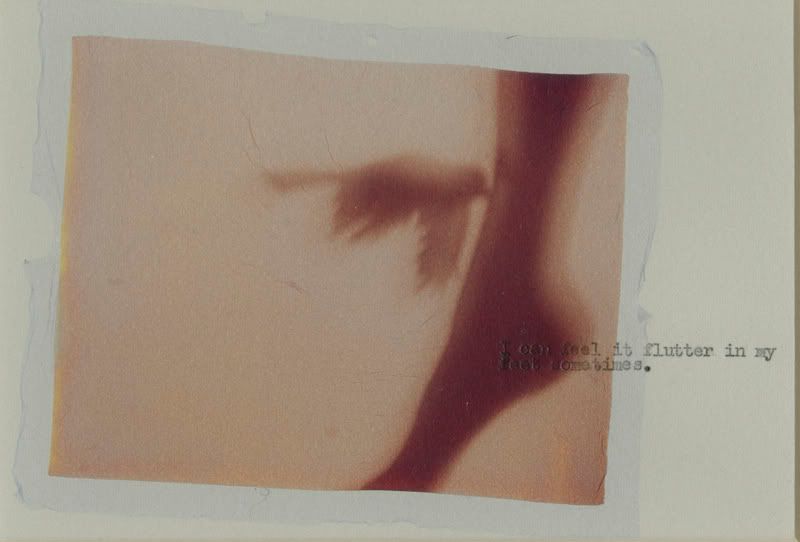
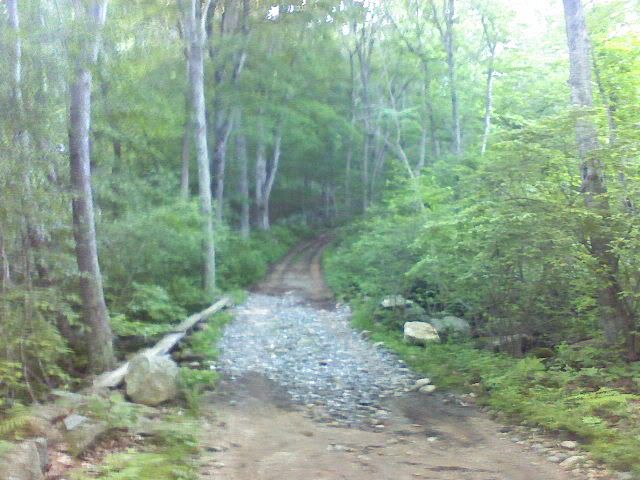
I started a poetry series of little things that I write exclusively when sleep-deprived. I wrote another just now. Last night I couldn't sleep. I sprawled out and flipped through sundry books; I took other books off my parents' shelves (Connolly's selected writings were too intense, Portrait of the Artist as a Young Man - with another person's marginalia - was much too compelling); I paced; I looked at things. Eventually, I took a walk in the woods that surround may parents' house. The moon wasn't out, but the snow gave off the most gorgeous ambient light.
Someone had been cross-country skiing up there. I wonder how they were able to avoid branches.
I listened to the trees creak. I held onto their trunks when the wind made them sway.
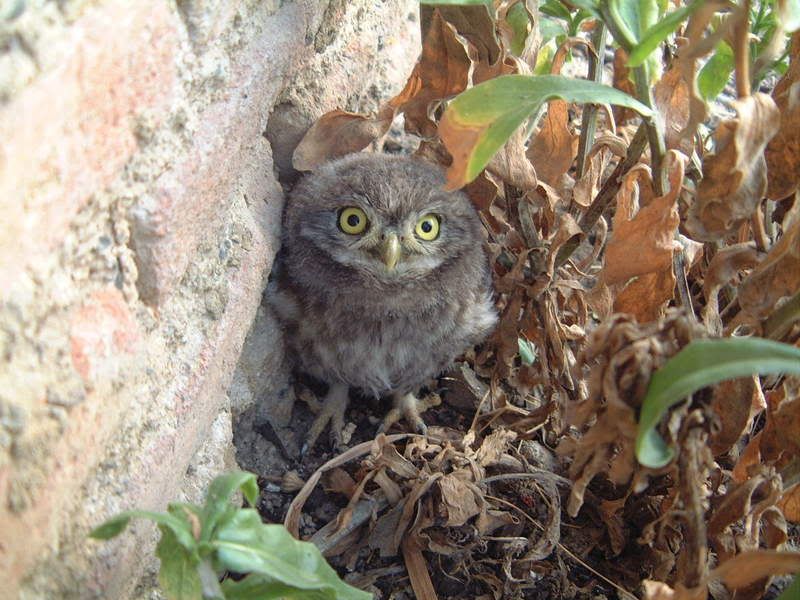
I rested at the top of the hill, determined to wait until I heard an owl. I did.
And as I started to return home, I saw a coyote. It looked at me. I looked at it. We parted ways.
I came home and thought about things. Earlier in the night, I had heard my father murmur that my mother is so beautiful as he was falling asleep. What a privilege to grow up amidst a love as deep as theirs.
I've been thinking and writing a lot these days of home.
The other weekend, waiting for a friend in New York, I was very struck by the observation that even in the city I find myself surrounded by hay. It's not that there was hay pervading my childhood, but I've come to associate it with home, since they got the horses. Now the smell of hay - musty, grassy, and warm - makes me think of being curled up on the couch with my folks.
My father commented recently that I only ever write about the bad stuff. It gave me pause. It just really hadn't, I think, occurred to me to divide life into good things and bad things.
I've been working more on my Archaeology of Wonder essays lately. One is about the woods I grew up amidst - the methods my family and I utilized to navigate our relationship to it. The other is about the time, as a toddler, I almost drowned.
Here's how it came about. I was walking up my driveway with Melissa and Felisa on a recent visit from them. Felisa had never been to my home before, so I was telling her stories about the woods. As we passed by the pipe I was sucked through as a 15-month-old, I told the story that my family always tells amongst ourselves about how it happened.
It's a short story, really more of a skeleton of a story than anything. Something in its manner reminds me of the schematics of myths that are in Edith Hamilton's Mythology. I guess I had neglected to tell them the story before; they had a stronger response to it than I had anticipated. I figure that, since the primary mode through which I know this event is through our truncated little sketch of a family story, my response to it is mitigated by the way it's told.
It made me think about the soothing role of repetition. It made me think about narrative and trauma, and about how we might align ourselves to different narrative threads throughout our lives.
I know that the idea that I'm writing about this thing that happened makes my parents uncomfortable. I wonder if perhaps it is harder for them because the trauma of the event was post-linguistic. For me it was pre-linguistic, so any story I tell myself about it remains just that - a story, no more or less moving than a novel.
I have never had an interest in those wretched water slides though. I can't think of an amusement more horrifying.
It's a rainy June morning. I kept the windows open last night, so there's a cool, wet breeze coming through to my living room along with all the sundry sounds of rain. It feels like England.
My neighborhood, Greencroft Gardens, right off Finchley Road, NW6
The house in which I lived in South Hampstead was on a quiet block near the Freud Museum. Women pushed prams most mornings, regardless of the weather. The clear plastic awnings that covered the children were speckled with a hundred rain drops, miniscule demi-worlds to capture a million-some details of the neighborhood's skyline. I always wanted to take a photograph from within there. The slate walks turned the deepest grey-brown in the rain and the modest trees smelled more like trees.
But, now, I am in my native Connecticut. The leaves on its stunning trees are now completely open. The Velvet Underground is on the record player and I am thinking of home. I'm thinking of things that we do over and over and return to with wonder. If wonder is the feeling of astonishment - that's not quite it - the feeling of our selves being thrown into a position from where we can no longer depend on our own significance in the face of some object, some occurrence, then how does it relate to something we do ritualistically?
For myself, I'm thinking of the woods, of the course I tend to track through them. Decades before my parents put in the riding ring, before any proper trails were established by Joshua's Trust, I would wander through the woods - so thick that the air looks green - and perch on boulders or test my balance on the edge of a cliff. I repeat these tests, these reveries regularly.
I think of the maps my father made me - my father, the map maker; my father, the poet - he would hide something for me in the woods and make a map, filled with fanciful names and "100-year Sugar Maples"s. He would stain the paper in tea to "age" it and he would burn the edges. He would make, in short, a world of measurement and wonder.
Natasha, about whom I only feel very slightly guilty for calling the best dog ever, loved moving rocks.
Natasha, swamp monster
Within the first year we had Natasha we began to become concerned that hunters might mistake her for a deer - the way she moved through the woods, bounding and leaping over fallen trees, stone walls; the color of her coat, that kind of tawny caramel - and so we tied surveyors tape to her collar.
The dogs who come to live with my parents have quite the life - there's a large property with hills, streams, swamps, and obstacles of all sorts around which for them to roam. There's a menagerie of other animals with which they can play (sometimes this playing is more savage than others. To wit, in their first year with us the puppies killed Nora's bunny Jack. At some point the dogs killed a cat they found in the swamp - although, our parents only admitted this to us about a decade after the fact. And then there was the Great Bullfrog (Jerky) Massacre of 1997-2003. The dogs particularly enjoyed catching the big bullfrogs that lived in the swamp the beavers left behind. They would kill them, bring them up to the yard, let them dry for a few days, and then nomnomnom on them.)
One of Natasha's favorite, and most peculiar, pastimes was to run up the hill in the woods and hunt rocks. Big rocks. Rocks that were underground. In another life, she might have been an expert truffle hunter, but as it was she lived with us and found us rocks. She would sniff them out, dig them up, and push them down the hill with her snout so that the yard was often littered with rocks bigger than her head.
She's covered with rocks now. I know it serves a practical purpose - we wouldn't want anyone digging her up - but I like the literal inversion of the tables, her beneath and them above. Weight pressing down and up. I visit here at the end of my runs and walks and hikes, some awkward demi-Heathcliff. (Don't worry - I don't actually exhume her.)
I know that there are many practical reasons my parents had for wanting a tractor - leveling and repositioning land for the riding ring, driveway maintenance, others that don't come to mind - but I like to think that they were inspired by Natasha's tireless rearranging of large rocks to do the same.
My parents went "tractor shopping" on every weekend for at least a year. It was part of what they do together as a couple. They have a whole routine of morning errands that usually incorporate feeding the bunnies at my mom's daycare center, picking up the paper from the general store, buying food for all the animals, and (at that point) tractor shopping.
During this tractor shopping year, my parents became increasingly convinced that I should marry the tractor salesman. It always kind of mystified me that they were seeing the same tractor salesman with such regularity that they could decide that he'd make a good son-in-law. But there you have it, they're very particular shoppers, my parents. They also have a penchant for selecting spouses for their children - the tractor salesman for me, the horse dentist (or, anyway, it's some man who has an equally esoteric equine-related job) for Nora, some linguist on TV for Patrick. They're regular Mrs. Bennets, my parents.
The urge to wed me off seems to have subsided along with the actual purchase of the tractor. They seem to be delighted by (in possession of minor injuries following) tractoring. To me, it seems as though they just move things around recreationally (although, arguably, my parents have a very labor-centered notion of recreation). (In full disclosure, I should admit to a deep abhorrence for lawn equipment dating back to the time in middle school that Sandy Mann showed me the toe he mowed off his foot. So, it's quite possible, I suppose, that the moving of things my parents do with the tractor is totally necessary, but that I am just too undereducated in the ways of lawn equipment to understand what's going on.)
At any rate, I prefer to think of the tractor as a kind of homage to Natasha.
In addition to being one of my favorite things to watch, this video shows rocks, do-it-yourself construction projects, and Natasha with surveyors tape.
Growing up as I did, the daughter of a surveyor, it is perhaps not surprising that I regularly wonder about borders and boundaries.
The forest in which Nora, Pat, and I grew up is filled with surprising stone walls - stone walls where no foundation or house is nearby, stone walls that the Joshua's Trust trails now traverse.
I've had debates in suburban backyards about whether or not property boundaries are real (nb. do not try to have this argument with an existentialist, even one well-acquainted with stone walls and hedgerows, unless you are prepared to give up a bit flustered).
In my days teaching daycare, I enjoyed watching the various methods 3-year-olds have for negotiating boundaries - rule bending, side-stepping, and loop-hole-finding at its best.
I look at this picture of my mother and I think she is probably the most beautiful woman I've ever seen.
Today my mother has officially spent half her life as a mother. She was 29. She had lived in Hawaii and Tucson and sundry locations across the Northeast. She had been married and divorced and married again. She and my father owned a house in the middle of a forest they loved. She had found a career in a field that utilized her degree (granted, that field did not and does not pay a living wage). She had and has great legs.
My parents’ house, the same house in which I grew up, is situated half way up the highest hill in our town. We lived in the midst of a dense deciduous forest. Patrick and I would play in the woods or down the hill in the stream that went beneath (and sometimes flooded above) our driveway.
The driveway itself is an old Town road. Woodland cuts North up through the trees and across the hill on which my house sits, snug amongst the Sugar Maples. The old Woodland continues beyond my house, gets lost and obscured in the woods a bit, and then emerges as an active, if unpaved road several miles out.
When we were young, Pat and I (and, later, Nora) were sent outside a fair amount. We would meander our way through the woods, to the swamp or to the stream. We would wander up the hill to the cliffs. After some time, we would hear it: the simulated owl’s hoot that one parent or other would let out, expecting us to echo back. It was our honing mechanism.
The woods are filled with sounds. It’s a tightly packed euphony: trees that creak in winter under the weight of ice or snow, animals that scamper through last autumn’s dead leaves, wind through trees and over rocks, water carving its way down the hill, and the owls.
Even as a child I was enamored with the owls. When, in Twin Peaks, various characters warn the “the owls are not what they seem,” rather than feeling alarmed by that kind of sylvan scopophilia, I felt comforted by the idea that these birds could be nocturnal sentinels.
One of my father’s favorite tasks is filling the bird feeders in the yard and off the porch. After he’s funneled the feed into the containers – some of them wooden, some of them copper and glass, some plastic and wire mesh – he stands back on the porch and surveys the field. He points out the woodpeckers, the blue jays, the sparrows. He pelts the occasional squirrel with a snowball.
My father protects those precious creatures. I mean precious in the sense Catholics mean it when they talk about the precious body or the precious blood. I mean that material form that takes on the qualities of the miraculous. Birds.
I suppose part of it started when we lived in the house on Storrs Road, by the lake. It was on the second floor of an early 19th-century farm house that had been converted in the 70s to apartments. We had a small porch and long stairway that we lined with flowers (a magnificent fuchsia that year) and tomatoes and basil. The sparrow built her nest in the eve of the small overhang that covered our doorway. In the mornings and evenings we would avoid opening the door very much at all so as not to scare her off. You would stand in the kitchen and elicit in me peal upon peal of laughter by imitating the babies.
It's still too sad to represent properly. After several days and no plaintive cries from the nest, I asked you to look in, to bury them somewhere. I couldn't even stand to look. And you did it for me.
I'm working up to something, here, but I can't just yet.
My friends alternate between calling me quirky and eccentric. That, I think, is as good a measure as anything.
Also: I have developed an unconventional relationship to popcorn since working at Real Art Ways.
Also, also: I like to oil my desk.
In the winter, I like to watch clemintine peels combust in the woodstove.