I've been kicking around the concept of secrets this week. My thoughts range from the personal (wondering about the secrets my family keeps vs the stories we tell) to the social (considering the phenomenal Post Secret).
The OED tells me that a secret is used in decribing "feelings, passions, thoughts: not openly avowed or expressed; concealed, disguised; also, in stronger sense, known only to the subject, inward, inmost. Hence said of the heart, soul, etc." (It's got a ton of really fun entries and is worth looking up for those of you who are into definitions.) It strikes me here that, if it is indeed the case that secrets describe feelings, etc., we hold close to our hearts and souls, we might need secrets to construct our identities.
In the spirit of experimentation, here are a couple secrets:
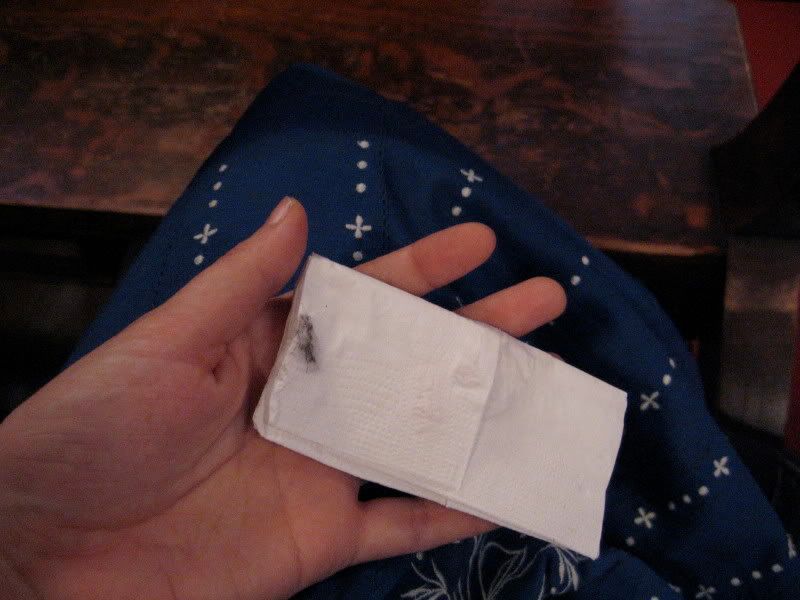
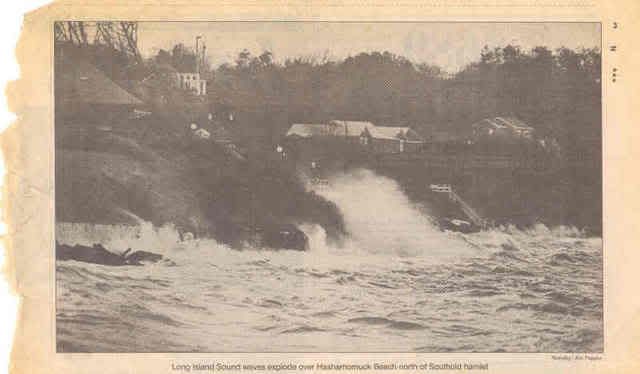
(Former) Secret 1: When I took this picture I was glad for the tears and the mascara and the tissue and my camera because I thought it made a good representation of the moment.
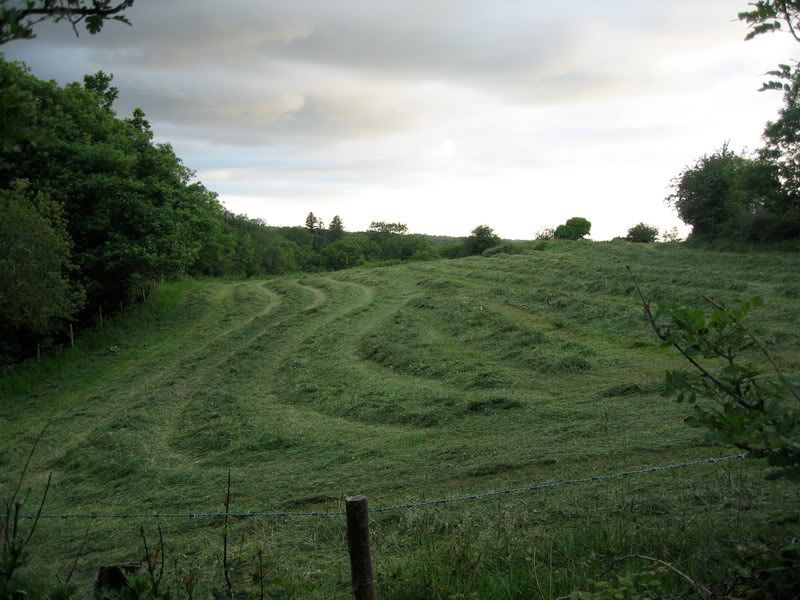
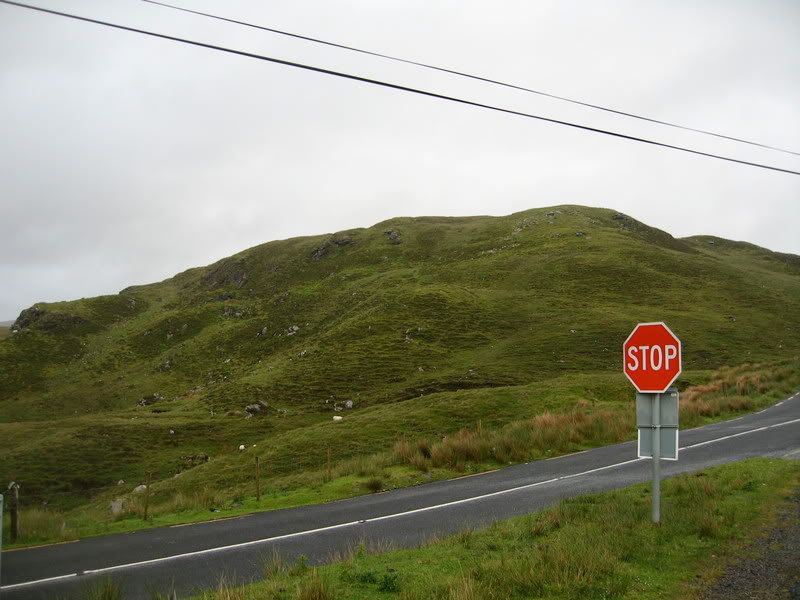
(Former) Secret 2: I took this picture, focusing on the aesthetic pleasure the rows of cut grass might create, because I was spooked by my surroundings. I was about a mile from the cottage in Ballyshannon (where I was staying alone). Up the street from where I was standing to take this was a trailer. Its front lawn was bounded by rusty barbed wire and there were runs from each front corner of the structure. One held a scraggly cur, the other a scraggly horse. Despite the fact that I felt utterly foolish being so spooked, I took off quick as I could back to the cottage.
I admit it: both of these secrets are totally banal. Even so, for some reason, I was very reluctant to write about either of them in a public way (even in the very limited way that I have here). So, I wonder in what ways I can tease out this tension between telling and not telling in my poems. It seems to me, too, that secrets could find their way into the prosthetic memory project.
Thoughts, anyone? Guidance? Suggestions for further reading?
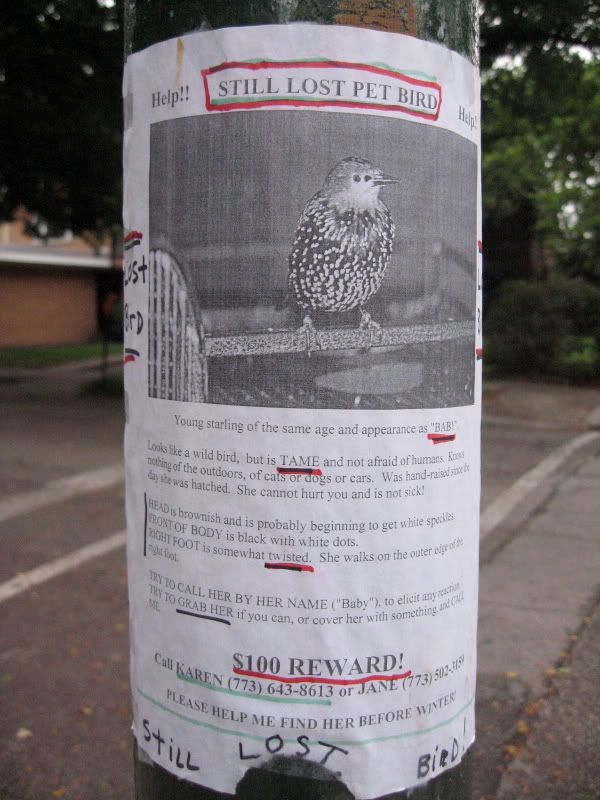
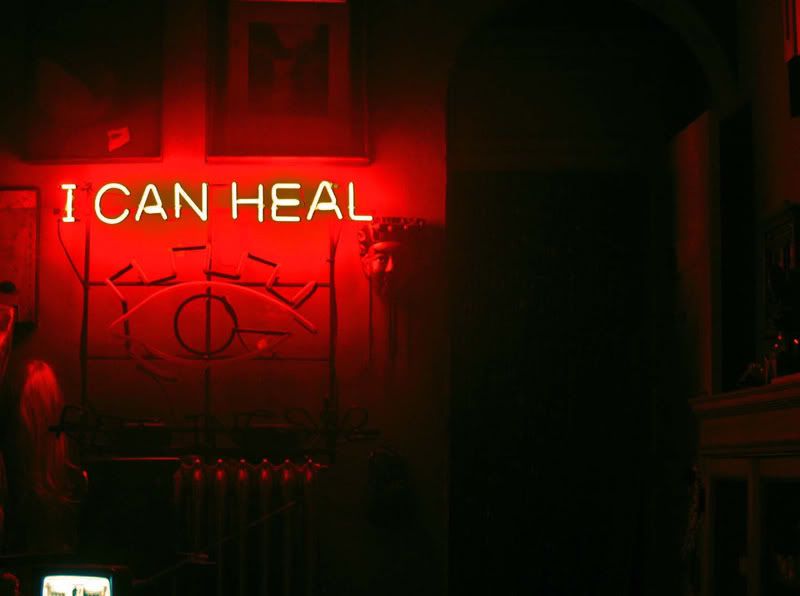
I saw it plastered (or stapled) all over Hyde Park on my last trip to Chicago.
I was in the city for the wedding of the first friend I ever made. I was returning to a city which had held a degree of symbolic potential for me. I had constructed Chicago as a place to which I could go to be freed from tethers - all of the expectations I had established and crushed and resculpted into simulacra of their prior selves during all the years I had passed in Connecticut. Chicago was a place where suddenly it didn't seem to matter to me that I don't have a PhD. In Chicago it didn't matter how I acted in high school. Personal history seemed to fall away in the face of this city, nestled in the middle of the continent and away from the sea.
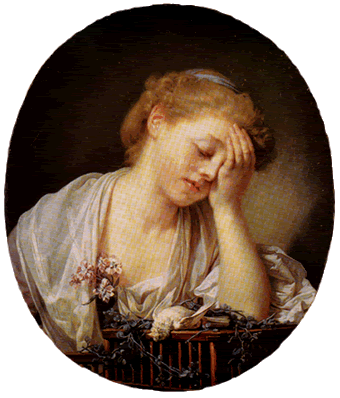
Still lost pet bird.
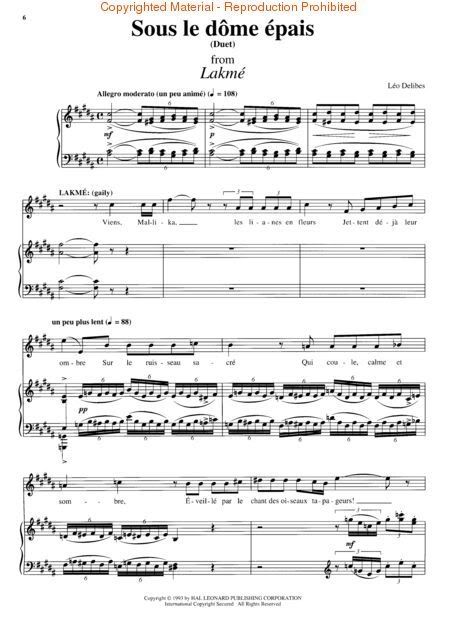
When I was a teenager I thought I wanted to be an opera singer. My house was filled with the flutterings of vocalise. I would walk in the woods behind the house and sing arias off the edges of the cliffs.
There was something terrifying and addictive about singing at that level. You are at once vulnerable and celebrated. You make a thousand exhibitions of your own unique self - of your voice and the ways it is beautiful and distinct.
These days, my voice has lost its flexibility and its range. It's no longer lithe enough to dance across runs, soft palate strong and arched. I rarely sing anymore ever. I reserve it for children (Brahms for Leah; Handel for Aidan; Fauré for Laura), or the car, or the empty woods.
I had been so scared that my voice wouldn't be exceptional that I forced it - deliberately - into dormancy.
Until somewhat recently, Saltpeter was a smell-with-no-name to me, that part of the remnants of fireworks that seemed to singe the inside of my nose.
When I was a girl, it was my father on every July 4th who would position himself at the dampened Volleyball court where he and Bob would set off fireworks. I knew from early on that what they were doing - these men, one my father and one a father figure - was illegal. I can only assume that it was the general affability of Bob and Merrill that caused the Town fire department to turn its back on the display. And I knew it was dangerous, although I probably imagined it to be more risky than it actually was. I was a reader and I think that's part of the reason I was such a dramatically-inclined little person, always playing out the worst scenarios I could imagine for every situation in which I found myself.
After we had all sung the anthem (usually followed by John Prine and Phil Ochs), after we had oohed and ahed our way through the display (me with my fists balled, nails into palms), my father would find me and pick me up and his hands smelled of saltpeter.
I've been meaning to write more about saltpeter (from which the Salpêtrière where Charcot worked took its name) for some time. The week of Guy Fawkes Day strikes me as the perfect time to do so. In 1999 on November 5, I was perched at the top of Primrose Hill with my mother and brother. We were drinking mulled wine and I was desperately hoping that none of the embers from the fireworks would fall into the Regent Park aviary.
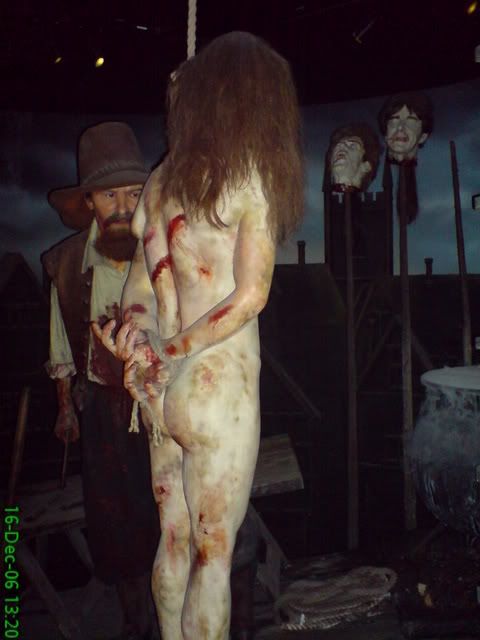
I've had a poem milling about in the recesses of my mind that would weave together several quasi-histories of saltpeter. One is that administrators of places where lots of young men cohabitated (British public schools, naval ships, prisons) packed their meals with the stuff in the hopes to fend of excessive onanism and homosexuality. Another thread of this poem would link fireworks in Paris to the more martial history of the Salpêtrière (it was a gunpowder factory before it was a hospital). The final strand of the poem is saltpeter's use in hoodoo, which removes the substance from its typical aggressive context and uses it for self defense.
by Renée Stout
I know. This sounds scattered, but I think there's a way of looking at each of the threads in relation to supression and sexuality.
It's hard to say with what frequency I become stir-crazy. I've alluded to it here before, but it's struck me again, now. It was yesterday, in fact, that it started. I can't fully explain how I made the leap from some vague kind of dissatisfactions to knowing - knowing - that I have to go off somewhere on my own.
And almost as soon as I identified the feeling - not, in some ways, dissimilar to the fantods - I knew where I have to go.
Nauset beach. I haven't been to the Cape in at least a decade. And here I am, 28 years old, living by myself, working in the arts, writing - and above all, at this moment, longing to put my body into the freakish Atlantic. (It could have something to do with the talk on Sylvia Plath that I'll attend on Sunday...)
A kind of strange video. The soundtrack consists of SP reading "Daddy."
This morning I went with my mother to surprise my father at the 40th anniversary banquet for the Connecticut Association of Land Surveyors. Earlier in the week Kathy, who runs CALS, had called to say that Dad is receiving an award for distinguished achievement and service. CALS has only given this award to two other people in its 40 years.
My father is (to understate matters) a diligent worker. He has worked in that old Victorian on North Main in Manchester for my entire life - starting in the basement (which has twice caved in as the result of reckless drivers smashing into the foundation) moving up to the gloriously sunny second floor, where his current office is perched among the turning leaves of a sugar maple.
My memory of my childhood is episodic. (I'm sure, as I get further into this new book, I'll be writing a lot more about this.) I remember the first time someone crashed into the building's foundation, balancing my way down the stairs to my father's work space. They were uneven and shallow. Normally I had the aid of the brick wall to my left as I went down them, but the force of the impact had caused the wall to crumble in, leaving brick-dust and flakes of the brick-colored paint they used on the wall coating much of the stairwell - as though some wind storm from Georgia had blown through the place.
The office was lit by a set of long, humming fluorescent lights that cast a kind of industrial green pallor over the place. I was an easily distractible child and, at times, the hum of those lights would wash out my ability to conjure anything other than their presence to mind. Along the wall ran a long drafting table on which my father made maps. I ran an index finger tip across the surface of the table. I turned my hand over to regard the impression the dust had made on me, smelled it. It smelled like that room, but concentrated.
I love the beach in fall, in winter, during a storm. That love, I suppose, comes from my father, who would (still does, I imagine) wake up in the dead of night to go to the shore to fish. He used it as a place for himself and, when we were there together, we were both able to be quiet about things.
It seems to happen in November that, for various reasons, I have found myself heading for the shore, certain that the thing to do - the primary thing to do - is to dip my skin (and all of my self in it) into the ocean. Just to see, I would tell myself. Just to see what it is my body would do. In prior years, I've been desperately sad on these occasions. This year, I feel melancholy.
It is this feeling that makes the beginning of Moby-Dick so hypnotic: "Call me Ishmael. Some years ago - never mind how long precisely - having little or no money in my purse, and nothing particular to interest me on shore, I thought I would sail about a little and see the watery part of the world. It is a way I have of driving off the spleen, and regulating the circulation. Whenever I find myself growing grim about the mouth; whenever it is a damp, drizzly November in my soul; whenever I find myself involuntarily pausing before coffin warehouses, and bringing up the rear of every funeral I meet; and especially whenever my hypos get such an upper hand of me, that it requires a strong moral principle to prevent me from deliberately stepping into the street, and methodically knocking people's hats off - then, I account it high time to get to sea as soon as I can. This is my substitute for pistol and ball. With a philosophical flourish Cato throws himself upon his sword; I quietly take to the ship. There is nothing surprising in this. If they but knew it, almost all men in their degree, some time or other, cherish very nearly the same feelings towards the ocean with me."
I wrote it years ago - "the sea was our apothecary" - I feel it in my marrow each year.
I don't know why it hadn't occurred to me yet. In the wee hours of yesterday morning, after the cat had started her autumn routine of waking me up at 5 am for food, I knew (with the certainty that one knows things in the early morning) what my next book of poems would be.
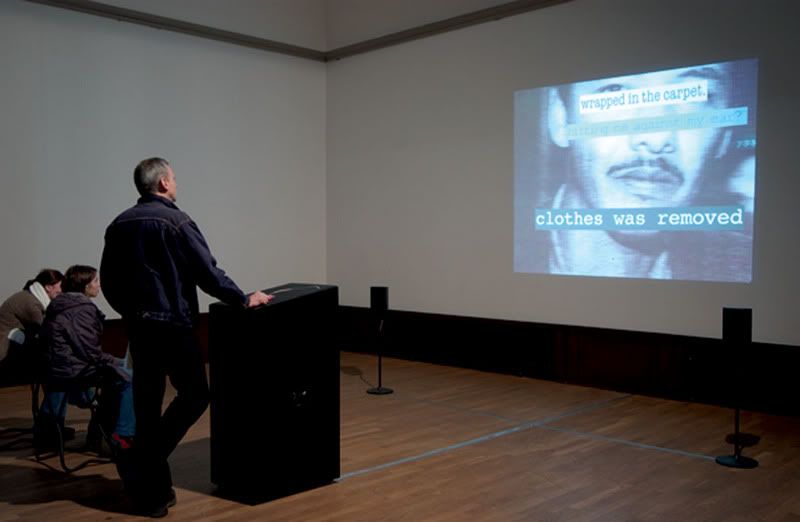
Had I continued my graduate education, I would have written my dissertation on cultural representations of memory in contemporary African literature and art. I was interested in instances in which we need to represent—even construct from time to time—collective memories. It seemed to me that, at times, we focus these collective memories on the experiences of individuals, rather than groups. So, the memorializing that happens around, say, the horrors of Apartheid, gets represented in individual testimony (Sue Williamson's Can't Remember, Can't Forget), descriptions of torture (as in JM Coetzee's novels), etc.
Sue Williamson. Can't Remember Can't Forget (installation view).
Perhaps it's not surprising, given my academic inclinations, that the poetry I tend to most enjoy reading is poetry that investigates individual histories. I'm thinking here of Natasha Trethewey, Marilyn Nelson, Eavan Boland, Seamus Heaney (at times), Elizabeth Alexander, et al.
When histories get reoriented to be primarily about an individual (rather than a group, or nation, or culture, for instance), they lose some of their facticity, they start treading close to that most unreliable of faculties, Memory. Histories, conventionally, are meant to be fairly solid claims about things and places and events and people. Again, conventionally, there's meant to be some degree of objectivity to it all. Memories, on the other hand, are radically subjective, shifting, fluid cognitive representations of things.
Poetry is another one of those unreliably subjective things. When history, then, finds its way into poetry, the polar relationship between the subjective and objective begins to crumble. That kind of crisis of polarity interests me. As I was thinking about it, it occurred to me that poetry can serve as this prosthesis for memory, whether they're individual or collective memories (hence the abundance of memorializing poetry).
The new book will be a collection of poems that perform that function: poems that have a prosthetic relationship to memory, both collective and personal.
I'm really excited about it.
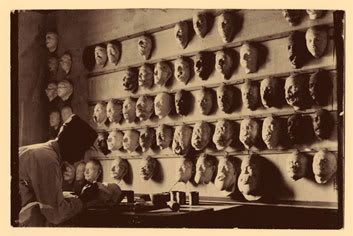
Wall of prosthetic faces for injured veterans of World War I.
I'm clumsy. In this case I don't mean gauche (although it's a lovely word and I am certainly capable of gauche behavior or accessorizing or decorating from time to time). I also don't mean unwieldy (although some of my exes may disagree). No, what I mean is that I am, quite simply, ungainly.
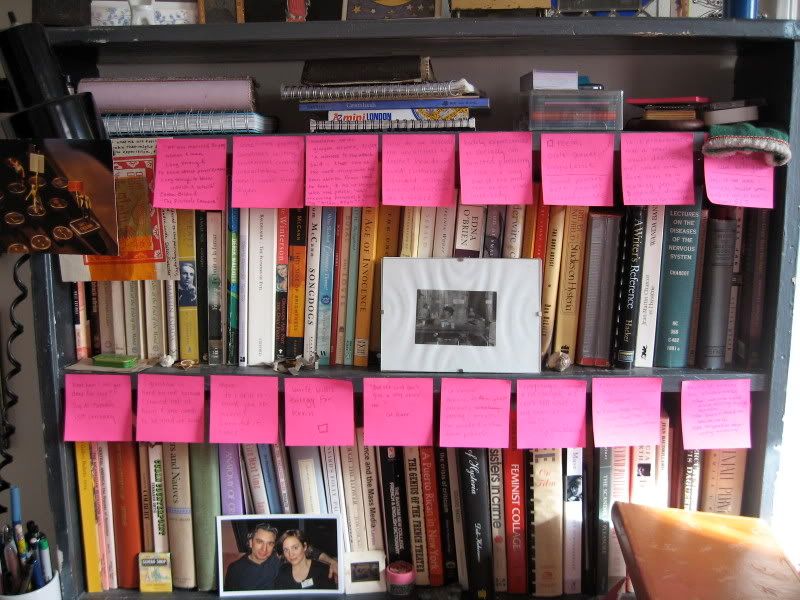
A couple months ago, I started a sticky note that lists incidents of clumsiness.
There was the time I burnt the inside of my left arm - this is embarrassing - while putting late night tater tots onto a plate.
There was the time I cut into the palm of my hand using, yes, a large kitchen knife to cut open an english muffin. (Sensible, wasn't that? I thought, at the time, that I was being very efficient, not dirtying another dish.)
There was the time that I swung my knees into my desk drawers when rotating in my chair. (There is a tally of seven next to that item.)
There was the time, last week that I was peeling apples Pat and I had just picked at Crooke's Orchard to make applesauce. I got just about through the whole couple dozen before the knife slipped, with no insignificant force, into the tip of my middle finger. It's mostly healed at this point, only I seem to have played with ink when it was still an open wound, thereby inadvertently tattooing the tip of my finger.
But there's only so much one can fit on a sticky. And my desk has already become what Melissa calls "Pink Explosion" (see above).
I started the sticky because at a certain point my proclivity for accidental minor injury struck me as poetic. There's something inescapable about incidents of clumsiness. They scream "Be here!" when one would otherwise be going about one's life with a certain amount of disassociation. I think poetry can do the same thing (although it tends to leave less permanent marks on one's body).
Periodically, during the past several months, I've returned to this video.
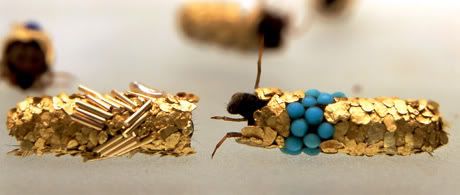
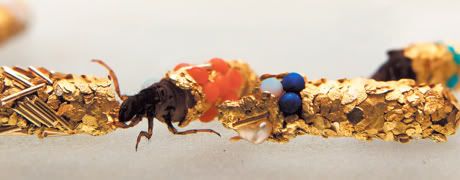
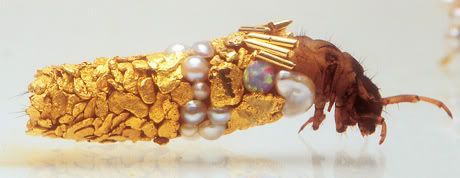
I really have a hard time putting into words the way I react to this project by French artist Hubert Duprat. It's totally mystifying to me. Yes, there's a whole canon of theory on which I could draw to talk about these larvae. But I really don't like to respond to them with something as easy as theory. It ends up feeling very utilitarian.
The truth of the matter is that I really love the way certain things confound my intellect.
My friends alternate between calling me quirky and eccentric. That, I think, is as good a measure as anything.
Also: I have developed an unconventional relationship to popcorn since working at Real Art Ways.
Also, also: I like to oil my desk.
In the winter, I like to watch clemintine peels combust in the woodstove.